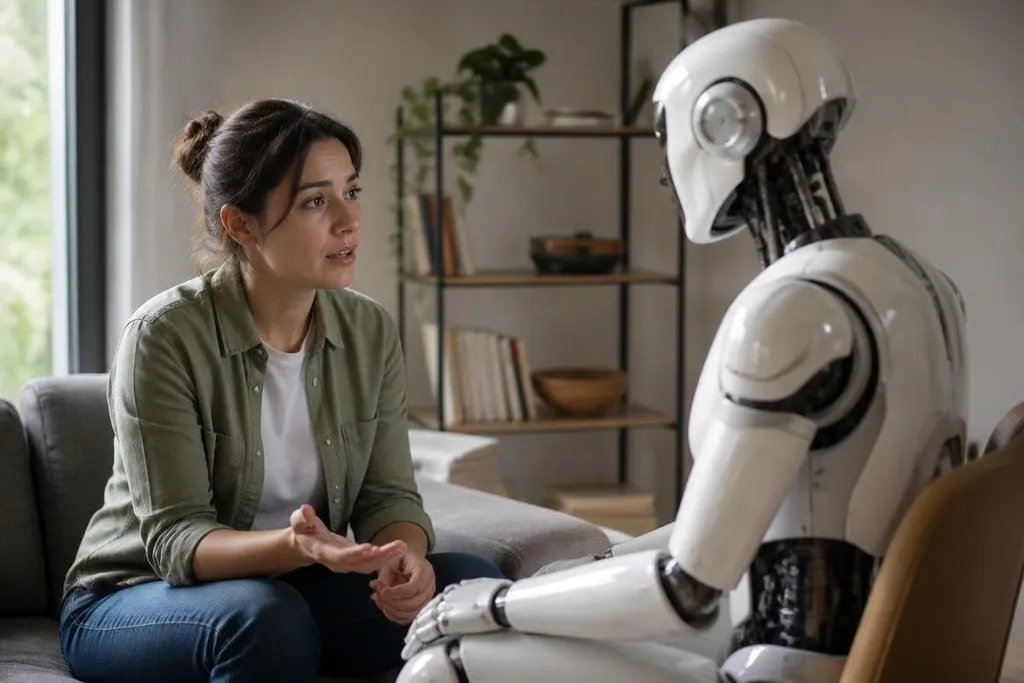
A robot that notices fear, confusion, or pain could make people feel heard. That feeling alone won't earn trust. People will judge the robot by what it detects, what it does with that information, and how clearly it admits its limits.
- Trust depends on visible actions, not a warm voice
- Personal data needs a clear purpose and boundary
- A human must remain available for serious decisions
Empathy needs a real meaning
For a robot, empathy can't mean having feelings. It means sensing signals such as speech speed, facial movement, body position, or a request for help, then choosing a response that fits the situation.
That response might be a slower explanation, a pause, or a request for human help. The robot should also explain what it noticed. “You sound upset, so I can repeat that step or call a supervisor” gives the person something they can check.
A soft voice is not enough. If the robot says it understands pain when it has only detected a louder voice, people may treat the claim as false. Trust falls when the words suggest more understanding than the sensors can support.
Actions matter more than tone
People tend to judge a machine through its results. An empathetic robot in a hospital would need to respect a request for privacy, repeat instructions at a suitable pace, and hand a serious concern to a nurse or doctor.
A care robot that keeps asking questions after someone asks for quiet has missed the point, even if its voice sounds calm. The same problem appears in a workplace robot that notices stress but still sends a worker into a task they have declined.
The machine also needs a clear stop button. A person should be able to pause a conversation, delete a recording, or ask what the robot has stored. Those controls turn trust from a feeling into a choice.
Where the idea can fail
An empathetic robot would collect sensitive information if it used voice, video, or health data to read a person’s state. That creates a direct question: who can see the data, how long does the system keep it, and can the person refuse collection without losing service?
A mistake can carry more weight when the robot sounds caring. Someone may accept bad advice because the machine appears attentive. The design must keep a clear line between emotional support and decisions that need trained human judgment.
People also bring different cultures, speech patterns, and physical conditions to the same system. A camera may read one person’s facial movement well and read another person poorly.
When the robot treats its guess as fact, the person must correct the machine before getting help.
Trust depends on what the robot does after its words sound caring. Reports on empathy in robots can tie claims about emotion-aware systems to named machines, test methods, and results. That record matters before the practical test asks whether people trust the robot when it gets something wrong.
A practical trust test
Before buying or approving an empathetic robot, check the parts that affect a person’s control:
- Ask what it detects. Get a plain list of sensors and the signals they read.
- Watch the handoff. Confirm that a human can take over when the machine is unsure.
- Test refusal. Check whether the robot stops recording and stops acting after a clear request.
- Read the data terms. Find the storage period, access rules, and deletion process.
- Set a failure rule. Decide which errors require a pause, a warning, or human review.
This test also helps separate comfort from safety. A robot may make a room feel calmer while still giving poor advice, storing too much data, or missing a person’s distress.
The standard people should use
I’d trust an empathetic robot as a limited assistant, not as a replacement for human care or judgment. Its value would come from making routine support easier while keeping its guesses visible and its authority small.
The next useful proof won't be a smoother voice. It will be a record of how often the robot reads a situation correctly, how it handles mistakes, and how quickly a person can take control. Until those details are public, trust should remain conditional.