
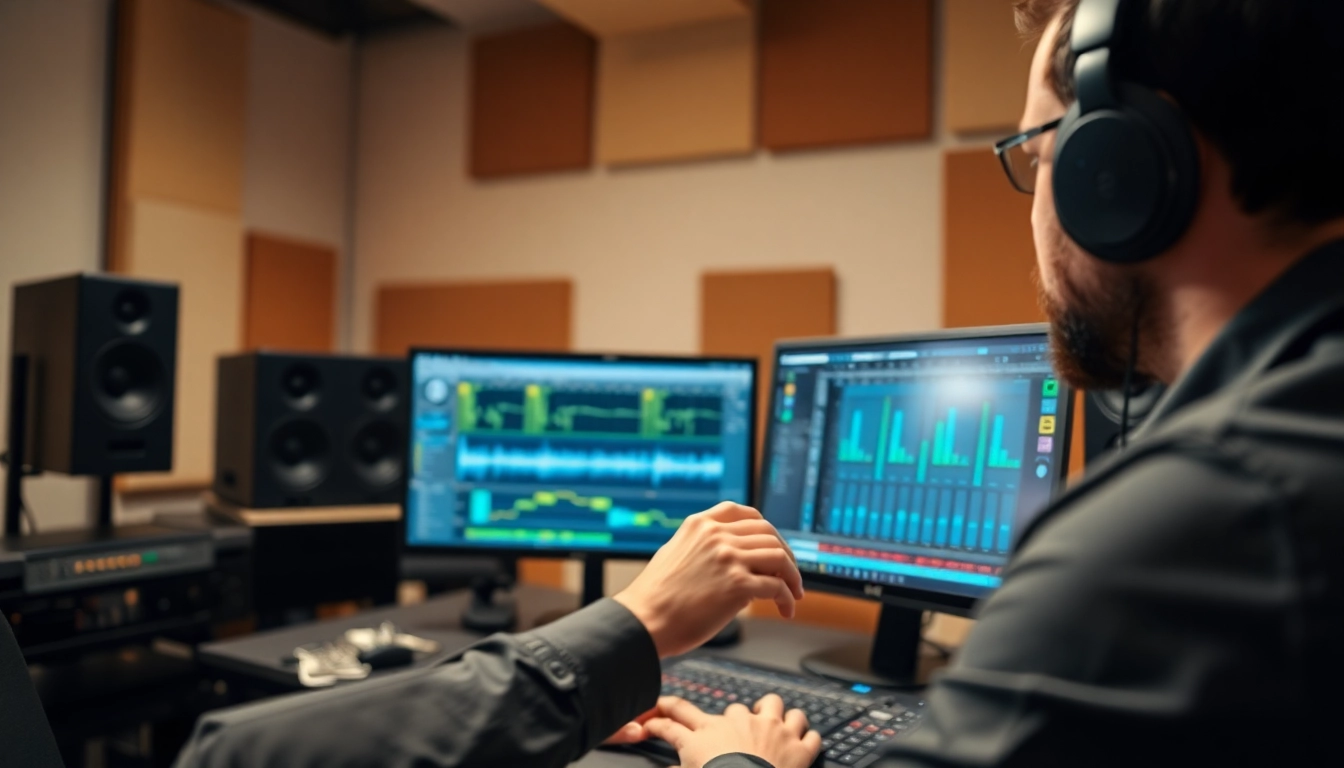
Understanding Online Audio Mastering
Definition and Importance of Online Audio Mastering
Online audio mastering is the final step in the music production process where a track is polished to achieve the best possible sound quality. This process involves adjusting volume levels, enhancing frequencies, and ensuring that the audio meets the technical requirements for distribution. In an age where digital music consumption dominates, the importance of professional audio mastering cannot be overstated. This process is critical for ensuring that songs sound great on various platforms and listening devices. Many aspiring musicians and producers are now leveraging online audio mastering services to elevate their music to a professional standard while saving time and resources.
Key Processes Involved in Online Audio Mastering
The mastering process typically includes several key steps: equalization (EQ), compression, limiting, and stereo enhancement. Each of these steps contributes to the overall sound quality and dynamic range of the final product. EQ balances frequency levels, ensuring that bass, midrange, and treble are harmoniously presented. Compression controls the dynamic range by reducing the volume of the loudest parts while boosting the quieter ones. Limiting ensures that the track does not exceed a specified loudness level, preventing distortion. Lastly, stereo enhancement widens the sound stage, making the track sound more immersive.
How Does Online Audio Mastering Differ from Mixing?
While both mixing and mastering are crucial processes in music production, they serve distinct purposes. Mixing involves combining individual audio tracks to create a cohesive sound. This includes adjusting the volume of each track, applying effects, and spatial placement of sounds. Mastering, on the other hand, takes the mixed audio and prepares it for distribution. It focuses on the technical aspects of the final product, ensuring it sounds consistent across different playback systems. Essentially, mixing is about artistic expression, while mastering is about technical excellence.
Essential Tools for Online Audio Mastering
Recommended Software for Online Audio Mastering
When it comes to online audio mastering, the software you choose can significantly impact your results. Some of the recommended DAWs (Digital Audio Workstations) include Ableton Live, Pro Tools, and Logic Pro X, which feature high-quality mastering tools. Additionally, specialized mastering software like iZotope Ozone provides a suite of features tailored for mastering, such as automated EQ and volumes adjustments. These tools not only streamline the mastering process but also offer professional-grade results.
Hardware Considerations for High-Quality Mastering
High-quality audio mastering is not solely dependent on software; the hardware plays a crucial role as well. Investing in a good audio interface is essential for capturing detailed sound quality. Monitors designed for accuracy, rather than for hype, are also critical. Brands that produce studio monitors well-suited for mastering include Adam Audio, Yamaha, and KRK. A well-treated room is equally important to avoid acoustic anomalies that can mislead your mastering decisions.
Plugins and Effects that Enhance Online Audio Mastering
Plugins are a significant asset in online audio mastering. Essential plugins include equalizers, compressors, limiters, and specific mastering plugins like stereo wideners. For example, using multiband compression allows for greater control over specific frequency ranges. Reverb might be less common in mastering, but certain subtle uses can add depth. The key is to use these effects judiciously to avoid over-processing, which can detract from the track’s natural sound.
Techniques for Effective Online Audio Mastering
Balancing Sound Frequencies in Online Audio Mastering
Balancing sound frequencies is a primary technique in online audio mastering. This process involves carefully adjusting the EQ to ensure that no frequency is overpowering another. Techniques like using low shelf filters for bass frequencies and high shelf filters for treble can help achieve a balanced sound. It’s vital to monitor these adjustments in the context of the entire mix, as changes may affect how each component interacts with the others.
Using Compression and Limiting Strategically
Compression and limiting are essential tools in mastering for controlling dynamics and overall loudness. However, it’s critical to apply these tools thoughtfully. Over-compression can strip a track of its character and emotion. A good practice is to use a slower attack time for compression to maintain the transients and liveliness of the track while ensuring it remains loud enough without distortion.
Preparing Files for Different Formats in Online Audio Mastering
As formats vary, preparing your master for different platforms, such as Spotify, SoundCloud, or CD formats, is essential. Each platform has its specific loudness standards, generally measured in LUFS (Loudness Units Full Scale). Mastering engineers must consider these varying standards to ensure the track sounds the best, no matter where it is played. It’s also important to provide both high-resolution files and versions optimized for streaming services, which often use lossy compression.
Common Challenges in Online Audio Mastering
Addressing Common Mixing Issues During Mastering
One of the significant challenges in mastering is addressing issues that originated in the mixing stage. Problems like excessive reverb, imbalanced frequency distribution, or muddiness can be difficult to rectify in mastering. Often, it is beneficial to revisit the mix and address these issues beforehand. For mastering, employing corrective EQ can be helpful; however, it is best to approach mastering with a mix that is already well-balanced.
Avoiding Over-Compression: Tips and Strategies
Over-compression is a common pitfall in online audio mastering that can result in a lifeless track. To avoid this, set clear objectives for compression. Use compression sparingly and avoid drastic adjustments. Listening to various reference tracks can help guide decisions on how much compression is ideal. Moreover, conducting frequent comparisons with and without compression can highlight the frequency balance and transient response, ensuring the artistic intent remains intact.
How Room Acoustics Affect Online Audio Mastering
The acoustics of the room where mastering takes place can significantly affect the final sound. Poor room acoustics can cause misleading frequency responses, making it challenging to make accurate mastering decisions. Using acoustic treatment, such as bass traps and diffusers, can create a better listening environment. Additionally, employing headphones alongside monitors can provide a secondary perspective on the mix, further ensuring accuracy in the mastering process.
Future Trends in Online Audio Mastering
The Role of AI and Machine Learning in Online Audio Mastering
AI and machine learning technologies are increasingly making their way into audio mastering. These technologies can analyze tracks and provide suggestions for improvements based on extensive data sets and industry standards. Some platforms offer AI-driven mastering solutions that automatically adjust EQs and dynamics based on the style of the track. While these tools can provide quick results, they are best used in conjunction with human expertise, ensuring that the creative essence of the music is preserved.
Increasing Popularity of Collaborative Mastering Platforms
Collaboration has become a cornerstone in modern music production, and mastering is no exception. Many artists and producers are now using online platforms that enable collaborative mastering. These platforms allow multiple users, regardless of geographical location, to share feedback and revisions in real-time. By enhancing communication during the mastering phase, artists can ensure their vision is accurately represented and executed.
Sustainability in Online Audio Mastering Practices
As sustainability becomes a growing concern globally, the music industry is starting to adopt eco-friendly practices, including in online audio mastering. This may involve using energy-efficient equipment, minimizing physical product creation, or implementing digital distribution methods. Artists are increasingly seeking ways to reduce their carbon footprint while still delivering high-quality music to their listeners, making sustainability an essential consideration in modern mastering practices.
Frequently Asked Questions about Online Audio Mastering
What is online audio mastering?
Online audio mastering is the final step in audio production, refining tracks for distribution by adjusting levels, EQ, and dynamics.
How does online audio mastering differ from mixing?
Mixing combines individual tracks to create a cohesive sound, while mastering polishes the mixed track for release, ensuring sound quality.
Can I master my own audio tracks?
Yes, you can master your own tracks, but professional mastering often provides a higher quality result due to experience and specialized tools.
What are the best tools for online audio mastering?
Recommended tools include digital audio workstations like Pro Tools, specialized mastering software like iZotope Ozone, and high-quality monitors.
Why is room acoustics important for mastering?
Good room acoustics prevent misleading frequency responses, enabling more accurate mastering decisions and preserving the track’s integrity.

